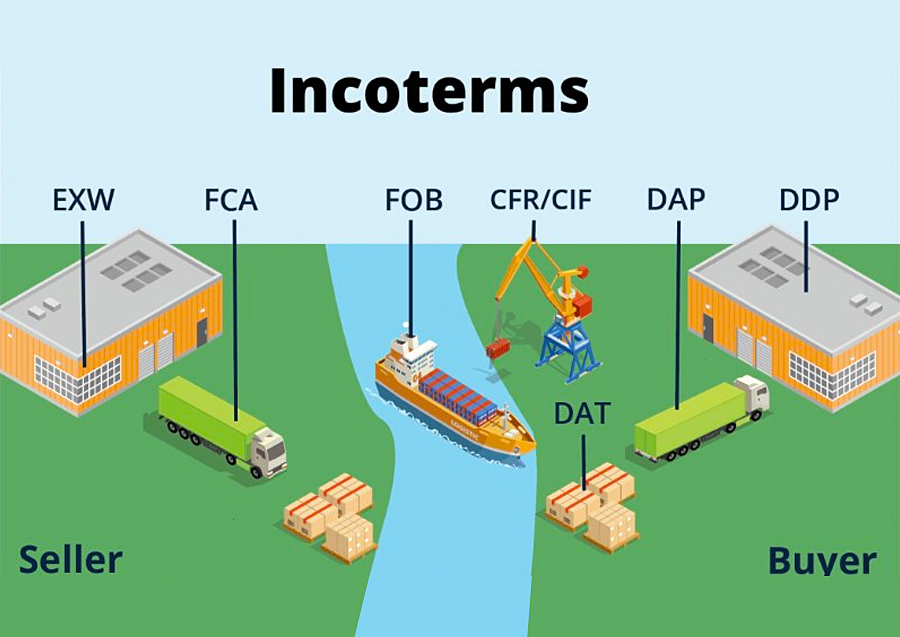
Types of transport-export contracts
…which define the terms and conditions of goods transportation in commercial transactions. These terms are particularly important in international trade, as they help businesses clearly outline responsibilities, costs, and risks associated with transportation. By using Incoterms, parties to a transaction can prevent misunderstandings and ensure compliance with their obligations and agreements.
In this article, we will explore various transportation methods and examine key considerations for each.
Types of Transportation Methods
In international trade, there are several transportation methods, the most common of which include:
EXW (Ex Works)
FOB (Free On Board)
CFR (Cost and Freight)
CIF (Cost, Insurance and Freight)
DDP (Delivered Duty Paid)
1. EXW (Ex Works)
This method allows the buyer to collect the goods from the seller’s premises, with all transportation costs and risks associated with moving the goods borne by the buyer. EXW is generally favorable to the seller, as it minimizes their responsibilities and expenses.
2. FOB (Free On Board)
Under FOB, the seller is responsible for the costs and risks of transportation until the goods are loaded onto the ship’s deck. Once the goods are on board, responsibility transfers to the buyer. FOB is one of the most popular methods in maritime trade.
3. CFR (Cost and Freight)
In CFR, the seller pays for transporting the goods to the destination port, but the risk transfers to the buyer once the goods are loaded onto the ship. This method ensures that the buyer receives the goods at the destination while the seller covers the shipping costs.
4. CIF (Cost, Insurance and Freight)
CIF is similar to CFR, with the key difference that the seller is responsible not only for the shipping costs but also for insuring the goods. This method provides greater protection for the buyer, as any loss or damage to the goods during transit is covered by insurance.
5. DDP (Delivered Duty Paid)
DDP places the maximum responsibility on the seller. The seller must cover all transportation costs, duties, and taxes, delivering the goods to a specified location in the buyer’s country. This option is highly attractive to buyers, as it minimizes concerns about additional costs and customs procedures.
Choosing the appropriate transportation method depends on the specific conditions, type of goods, and agreements between the parties. A proper understanding of Incoterms and selecting the right method can facilitate trade processes and reduce associated risks.